Skip to content

News

  • Living+: A Cultural Movement Redefining Public Health

    Living+: A Cultural Movement Redefining Public Health

    Photographer by Yasemin Demirözcan | Location is the Amsterdam City Archives | Special thanks to Sophie Tates and Eric Heijselaar |  Jacquill G. Basdew wears a full look by Extreme Cashmere | Interview by Passion Dzenga In a time when public health is often discussed in ways that feel distant, clinical, or inaccessible, socio-cultural initiator Jacquill G. Basdew is reshaping the conversation—rethinking how arts, culture, and intergenerational dialogue can be used to transform complex issues into something younger generations feel compelled to engage with. With Living+, a new recurring initiative, he brings greater cultural visibility to urgent public health themes - fostering understanding across generational and social lines, and working toward a society where care, awareness, and belonging are more widely shared.Launching this winter in Amsterdam, the first edition—Memories in Motion—runs from November 21 to December 21 and focuses on HIV/AIDS. While medical advances have changed the course of the epidemic, public understanding has not kept pace. Much of the conversation now takes place in institutional or scientific settings—often far removed from the cultural awareness of younger generations. Through archival research, performance, nightlife, and remembrance, Living+ bridges that gap, honouring the past while reactivating a conversation that remains deeply present. But for Jacquill G. Basdew, the story starts much earlier - and much closer to home.Let’s start at the beginning - you chose to open Living+ with a focus on HIV/AIDS - a subject layered with history, stigma, and ongoing relevance. What led you to begin there?HIV/AIDS has been a recurring presence throughout bsdwcorp., the socio-artistic practice I run. One of my earliest mentors, the esteemed British artist and filmmaker Sir Isaac Julien CBE RA, introduced me to the work of bell hooks, which opened a portal to the worlds of Black queer trailblazers such as Marlon Riggs and Essex Hemphill, and later to conversations with Sunil Gupta, Ajamu X, and younger artists like Clifford Prince King. Across generations, HIV/AIDS has been a red thread in their lives and work, and that thread runs through mine too. As a Black queer man in the West, I often think: had I been born a decade or two earlier, it could have been me. I was fortunate to grow up in a time when treatment existed, when I could live freely and safely, but that freedom is shaped by the lives and losses of those who came before me. Their work inspires mine. Beginning Living+ with HIV/AIDS was not just a decision. It was a responsibility.Living+, lays focus on how conversations around HIV/AIDS can be made more accessible and resonant today. How do you see cultural memory and storytelling shaping public health narratives in this context?Conversations around HIV/AIDS have not disappeared, as shown by the recent International AIDS Conference in Kigali, but they often take place in scientific or policy-driven spaces that feel distant from everyday life. The language can be technical or abstract, which limits who feels invited in. With Living+, we are not reintroducing the topic. We are reframing how we talk about it. Cultural memory and storytelling make these complex realities more human and emotionally accessible. In a fast-paced media landscape, we need to meet people where they are. Through art, fashion, music, and cultural experience, we can open the door to deeper engagement and collective understanding.So in that sense, storytelling and cultural engagement become tools to reach people who might otherwise feel excluded from, or not even aware of, traditional public health conversations?Exactly. Symposiums and conferences are important, but they often speak to those who are already engaged. The wider public, especially younger generations, is not always invited into those rooms, and many are not even aware of the devastating early history of the epidemic. With Living+, we are trying to build a bridge between generations and perspectives. A dear friend of mine, the photographer Lyle Ashton Harris, who is based in New York, once reminded me how important it is to honour the conversations that came before us. It is not about reinventing the wheel. It is about adding to progress with care, with context, and with respect for those who paved the way.That brings us to the heart of the initiative. Could you share some of the key events and collaborations that will take place this winter as part of Living+?Absolutely! We kick off Memories in Motion, the first edition of Living+, on Friday, November 21, at the Amsterdam City Archives with a presentation of archival materials from the 1980s and 1990s that reflect the city’s early response to HIV/AIDS. It felt important to begin in a place where stories are preserved, remembered, and sometimes forgotten. This grounds the initiative in lived experience and honours a history of care and resistance.From there, the initiative unfolds into a month of public events, leading to a central moment on November 30 at Paradiso. That evening, which continues into World AIDS Day on December 1, builds on the legacy of the legendary Loveballs once held in the same venue. Expect a night of community, remembrance, art, dance and joy.You’re also collaborating with organisations outside of traditional cultural institutions, like Patta and Paradiso. Why?For us, it was important to work with partners who are deeply rooted in everyday culture. Patta and Paradiso, to us, are key voices in how people experience culture today. Their foundations in fashion and music allow them to speak directly to communities that more traditional institutions often do not reach. By standing alongside names like theirs, Living+ feels more open and familiar. Museums and theatres can still carry a sense of distance or exclusivity for many, while places like Paradiso and Patta feel inviting and accessible.And this is very much a pilot year, correct? You're testing what works and what doesn't?Absolutely. This first edition of Living+ is a real test run. We are putting a variety of moments out into the world to see what clicks and what does not. Once it is all wrapped up, we will take time to reflect, hear what people thought, and fine-tune things for next year. It is not just about launching something. It is about learning how to listen. We are especially curious about what tools actually help spark connection, especially among people who are culturally curious and looking for meaning, community, and ways to get involved. If something works, we want others - whether they are working in health, education, or the arts - to be able to take that and run with it. Living+ is our way of adding to the bigger goal of building a more open and less divided society.You’ve mentioned that this project could grow into a broader framework. How do you see Living+ evolving?We see Living+ as something that can grow far beyond this first edition. The plus in the name stands for everything that comes with being alive—complex, layered, ever-changing. It was never meant to be a one-off moment. This first chapter focuses on HIV/AIDS because of its deep cultural legacy and personal meaning for many of us. But over time, we hope to use the Living+ framework to explore other urgent topics in public health, from mental health to sexual well-being to the everyday systems of care that often go unseen. The bigger ambition is to build an open and evolving platform that uses culture to spark connection, encourage conversation, and bring more people into the fold in ways that feel meaningful and grounded in real life.You also mentioned that you're not a public health professional—but you're still shaping a powerful public health message through collaboration. How vital is collaboration to the Living+ project?Collaboration is everything. I am not a public health professional, and I don’t pretend to be. But I do believe in the power of bringing different forms of knowledge together. Living+ was never meant to be created in isolation. From the very beginning, we’ve worked with people from different disciplines - healthcare professionals, researchers, creatives, community organisers - because no single voice can carry the weight of something this complex.It’s in the meeting of perspectives that something meaningful begins to take shape. My role is to listen, to connect, and to create a space where these different forms of expertise can co-exist and inform each other. That’s how we move toward solutions that feel grounded, human, and lasting.In all of this, what has moved or inspired you most along the way?What keeps me going is realising how much incredible work is already happening. Every time I talk to someone about Living+, they connect me with someone else doing similar work. It’s inspiring to see that community already exists - we just need to connect the dots. That’s what I’m hoping this project will do: build community, bridge generations, and create space for joy, reflection, and solidarity.On the eve of World AIDS Day, Living+ gathers in Paradiso’s Small Hall for an intimate evening of remembrance and artistic encounter. Inspired by the historic Seropositive Ball and Love Ball, which once filled this city with bright, defiant life, Remember the Love carries their spirit into a contemporary, quieter form shaped by tenderness, memory and community.At the heart of the evening is a special fundraiser for IHLIA, the Amsterdam-based heritage organisation for LGBTIQ+ history in the Netherlands and home to the largest LGBTIQ+ collection in Europe. As essential archives like IHLIA face increasing financial pressure, this initiative is led by a younger generation that understands its place in a lineage and seeks to honour the histories that shaped it. Guests can support the fundraiser throughout the night or via the dedicated link.The programme opens with the world premiere of Only You, performed by yazija, the long-durational performance vehicle of the artistic and social practice bsdwcorp, founded by J.G. Basdew. For this occasion, yazija is accompanied by Sabiá on piano, who created the arrangements from Basdew’s original compositions. Rooted in music and active remembrance, Only You unfolds as an intimate act of listening and witnessing in which sound becomes a vessel for memory. Personal histories open into a shared emotional landscape, offering an early glimpse of a larger presentation to come during World Pride 2026.The programme then flows into a Solidarity Gathering hosted by R.U.I.S. Collective (Remembering Us in Solidarity). R.U.I.S. is a queer-led, anti-capitalist movement that reimagines nightlife as a space of resistance, care and political imagination. Known for transforming gatherings into sites of radical solidarity, R.U.I.S. brings together art, community and activism in a spirit of collective liberation.A soft DJ-set by Slimfit, co-founder of R.U.I.S. Collective, anchors the atmosphere as the Small Hall becomes a temporary archive of care, presence and reflection. Guests are invited throughout the evening to support IHLIA—ensuring that the histories preserved there remain accessible to younger generations encountering them for the first time. The evening closes warmly and gently in the same shared space.Remember the Love is part of Living+ (21 November to 21 December 2025), an international cultural programme exploring how art and intergenerational dialogue can bridge the widening gap between urgent public-health conversations and younger generations who often engage these histories at a distance. Its first season, Memories in Motion (2025), centres on the lived realities and emotional legacies of HIV/AIDS. Tickets are available now. 
    • MAGAZINE

  • ODUMODUBLVCK at Patta London

    ODUMODUBLVCK at Patta London

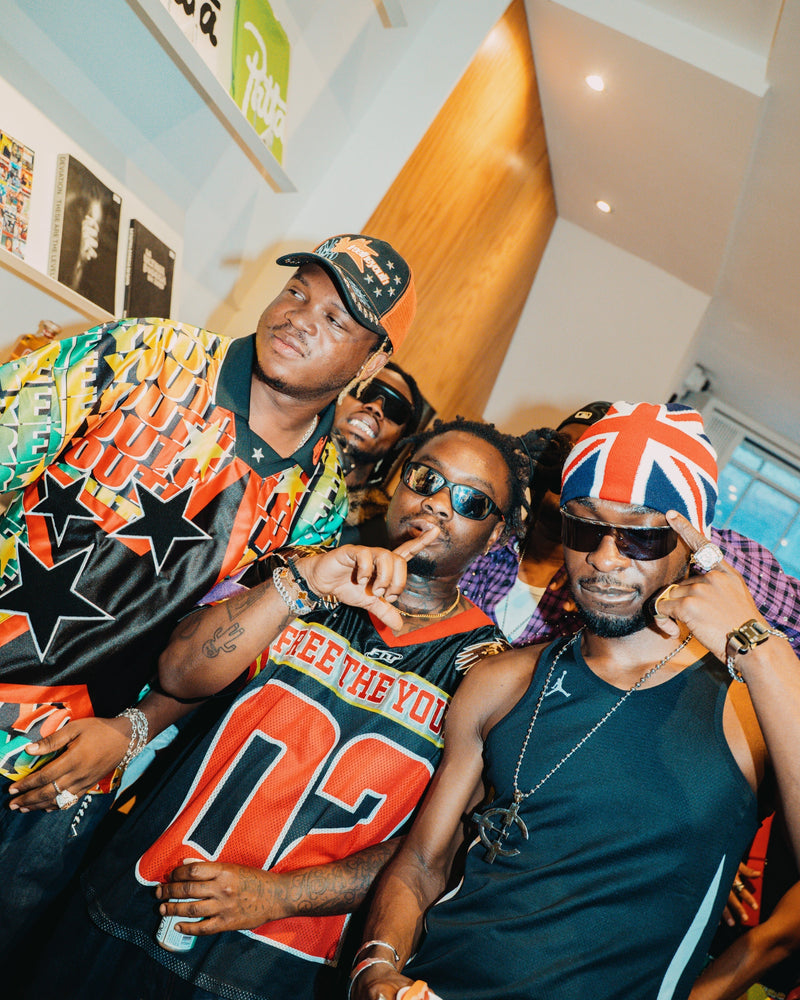
    The Machine touches down in London. For one afternoon only, Odumodublvck is connecting with Patta London ahead of his headline show at Drumsheds this Friday, November 21st. Join us in-store for an exclusive chance to purchase the limited Patta x Odumodublvck T-Shirt, available only during this special moment. First come, first served.
    • Events

  • Murkage Dave - Swordfight In A Chicken Shop

    Murkage Dave - Swordfight In A Chicken Shop

    Murkage Dave is back with a brand new music video for Swordfight In A Chicken Shop
  • Mixtress & Passion DEEZ at Patta x Keep Hush

    Mixtress & Passion DEEZ at Patta x Keep Hush

    Patta x Keep Hush returned to Skatecafé for their third ADE takeover, curated by Passion DEEZ. This year’s event championed Amsterdam’s underground sound, past and present, with a lineup of DJs who’ve helped shape the city’s vibrant nightlife scene and those who will carve a path in coming years True to Keep Hush’s roots, the night was a celebration of underground club music, blending jungle, garage, dubstep, UK funky, drum and bass, and bubbling; reflecting the diverse and boundary-pushing energy that defines Amsterdam’s dance culture.
    • Music

  • Slimfit at Patta x Keep Hush

    Slimfit at Patta x Keep Hush

    Patta x Keep Hush returned to Skatecafé for their third ADE takeover, curated by Passion DEEZ. This year’s event championed Amsterdam’s underground sound, past and present, with a lineup of DJs who’ve helped shape the city’s vibrant nightlife scene and those who will carve a path in coming years True to Keep Hush’s roots, the night was a celebration of underground club music, blending jungle, garage, dubstep, UK funky, drum and bass, and bubbling; reflecting the diverse and boundary-pushing energy that defines Amsterdam’s dance culture.
    • Music

  • Cheyanne Hudson at Patta x Keep Hush

    Cheyanne Hudson at Patta x Keep Hush

    Patta x Keep Hush returned to Skatecafé for their third ADE takeover, curated by Passion DEEZ. This year’s event championed Amsterdam’s underground sound, past and present, with a lineup of DJs who’ve helped shape the city’s vibrant nightlife scene and those who will carve a path in coming years True to Keep Hush’s roots, the night was a celebration of underground club music, blending jungle, garage, dubstep, UK funky, drum and bass, and bubbling; reflecting the diverse and boundary-pushing energy that defines Amsterdam’s dance culture.
    • Music

  • AMARA at Patta x Keep Hush

    AMARA at Patta x Keep Hush

    Patta x Keep Hush returned to Skatecafé for their third ADE takeover, curated by Passion DEEZ. This year’s event championed Amsterdam’s underground sound, past and present, with a lineup of DJs who’ve helped shape the city’s vibrant nightlife scene and those who will carve a path in coming years True to Keep Hush’s roots, the night was a celebration of underground club music, blending jungle, garage, dubstep, UK funky, drum and bass, and bubbling; reflecting the diverse and boundary-pushing energy that defines Amsterdam’s dance culture.
    • Music

  • Zilla at Patta x Keep Hush

    Zilla at Patta x Keep Hush

    Patta x Keep Hush returned to Skatecafé for their third ADE takeover, curated by Passion DEEZ. This year’s event championed Amsterdam’s underground sound, past and present, with a lineup of DJs who’ve helped shape the city’s vibrant nightlife scene and those who will carve a path in coming years True to Keep Hush’s roots, the night was a celebration of underground club music, blending jungle, garage, dubstep, UK funky, drum and bass, and bubbling; reflecting the diverse and boundary-pushing energy that defines Amsterdam’s dance culture.
    • Music

  • YENTZYZ at Patta x Keep Hush

    YENTZYZ at Patta x Keep Hush

    Patta x Keep Hush returned to Skatecafé for their third ADE takeover, curated by Passion DEEZ. This year’s event championed Amsterdam’s underground sound, past and present, with a lineup of DJs who’ve helped shape the city’s vibrant nightlife scene and those who will carve a path in coming years True to Keep Hush’s roots, the night was a celebration of underground club music, blending jungle, garage, dubstep, UK funky, drum and bass, and bubbling; reflecting the diverse and boundary-pushing energy that defines Amsterdam’s dance culture.
    • Music

  • NoizBoiz at Patta x Keep Hush

    NoizBoiz at Patta x Keep Hush

    Patta x Keep Hush returned to Skatecafé for their third ADE takeover, curated by Passion DEEZ. This year’s event championed Amsterdam’s underground sound, past and present, with a lineup of DJs who’ve helped shape the city’s vibrant nightlife scene and those who will carve a path in coming years True to Keep Hush’s roots, the night was a celebration of underground club music, blending jungle, garage, dubstep, UK funky, drum and bass, and bubbling; reflecting the diverse and boundary-pushing energy that defines Amsterdam’s dance culture.
    • Music

  • L-Dopa at Patta x Keep Hush

    L-Dopa at Patta x Keep Hush

    Patta x Keep Hush returned to Skatecafé for their third ADE takeover, curated by Passion DEEZ. This year’s event championed Amsterdam’s underground sound, past and present, with a lineup of DJs who’ve helped shape the city’s vibrant nightlife scene and those who will carve a path in coming years True to Keep Hush’s roots, the night was a celebration of underground club music, blending jungle, garage, dubstep, UK funky, drum and bass, and bubbling; reflecting the diverse and boundary-pushing energy that defines Amsterdam’s dance culture.
    • Music

  • Get Familiar: Pozzy

    Get Familiar: Pozzy

    Photography by Patrick Sear | Interview by Passion DzengaFrom small-town beginnings in Bury St Edmunds to festival stages across the UK, Pozzy is fast becoming one of the most refreshing new voices in grime’s evolving landscape. His music sits somewhere between laid-back jazz, sample-rich hip-hop, and the percussive pulse of the 140 BPM underground—a sound that feels both familiar and forward-looking. What started with piano duets and late-night freestyles with friends has grown into a fully realised artistic vision built on honesty, humour, and homegrown perspective.At just 20 years old, Pozzy already moves with the focus of an artist who knows where he’s heading. He writes from his daily life—train journeys, late-night links, small wins, and big questions—and filters it all through a jazz-infused, mellow grime sensibility that’s distinctly his own. His latest singles, “Step on the Train,”, “wait and see” and upcoming EP, ‘it’s all up in the air.’, showcase that blend perfectly: conversational but poetic, playful but grounded, catchy but never shallow.Whether rapping about the commute, the come-up, or creative community, Pozzy’s voice feels rooted in something real—a reflection of a generation navigating uncertainty with optimism and soundtracking it with style. Ahead of his headline show at Camden Assembly on November 25th, he sat down with Team Patta to talk early influences, train rides, and the art of staying grounded while moving full speed ahead.Where are you from, and what music filled your home growing up?I’m from Bury St Edmunds in the east of England. At home, it was mostly whatever was on the radio, but my mum played piano and got me into keys early, so there was a lot of piano around—classical pieces and pop songs we’d play as little duets. I’d always sing along to the radio, too. That’s where the musicality started before I ever thought about rapping.Did you feel represented by what you heard around you?Where I’m from isn’t exactly an arts hub, so I wasn’t thinking “this isn’t experimental enough.” It wasn’t that deep—more just taking in whatever was there. For local references, Ed Sheeran’s from the same county, but a different town.How did you move from keys to rapping?It started with me and my friends rapping over instrumentals after school. At the same time I began studying music production at college, which helped me build skills and rap over my own beats as well.Which instrumentals defined those early sessions?MF DOOM beats were the go-to—there was that famous instrumentals playlist—and a lot of Pete Rock-related stuff. I didn’t clock it as “jazzy” back then, but that’s obviously the lane I kept gravitating toward.At college, were you making music for this project or ticking assignment boxes?I tried to bend every brief toward my own sound. It was early days, so there’s old music on my Spotify I’ve definitely outgrown—but it shows the journey. And it’s useful: when someone searches your name, something actually comes up.What’s changed most in your approach since then?I’m 20, still developing, but this year I started treating it like it has to work—leaning into the less glamorous bits: business, marketing, planning.Are you studying music now?Yeah—music production at uni. I’m in my final year.Is “train culture” just practical, or part of the aesthetic now?Both. I grew up countryside so I drive, but I don’t have a car. In London it’s all public transport—if you’re going anywhere, you’re on the train. It’s just life.Your recent single “Step on the Train” dropped recently. What’s the story?“Step on the Train” came out late September. The Producer Quill had sent a beat pack that landed in my spam; first beat I opened was the beat. I wrote it in about 25–30 minutes and recorded it at my desk. It’s jazzy, has breaks, and it’s part of my EP ‘it’s all up in the air.’,(out very soon). Lyrically it’s just my weekend perspective—get on the train, link mates, go out. Simple and real.Morning commute or late-night ride?Late night. Mornings are cold outside, boiling on the train, and packed.How do you usually make a track—lyrics first or beat first?Both. Sometimes I’ve got bars in my notes and I hunt for the right beat. Other times a beat sparks the first lines and I build from there. Keep it fluid.What do you and your friends actually get up to on a typical weekend?Depends on the day—park and football in summer, pub, cinema, shopping, studio. Normal stuff with the same people who inspire me.People group you with “mellow grime” or “alt-grime.” Fair?I like mellow grime—the community’s egoless and supportive. I don’t want to be boxed in forever, though. I listen to R&B, hip-hop, electronic, house, jazz. The EP hints at where I might go next while still owning grime DNA.Grime’s now global—how do you see your place in it?140’s worldwide. I love that the scene connects different people and cities. My friends and I are a little community we’ve built through music—that’s the bit I rate the most.Tell us about the EP — what should people take from ‘it’s all up in the air.’?The title’s about uncertainty—and being okay with it. There are different sounds on here; hopefully something for everyone. It shows I’m happy to make grime-adjacent music but with my own twist. Biggest message: be yourself, even when things feel up in the air.Do people ever judge you against the “traditional” idea of a grime artist?Some people are surprised at first—most in a good way. Some don’t get it and that’s fine. As long as I’m respectful and authentic, I’m enjoying it—and most people see that.Co-signs have been rolling in. How does that feel—and what about hearing from abroad?Surreal. I won’t name names, but there are artists I grew up on who’ve shown love. Hearing listeners from the Netherlands, the States, and Australia—wild, and motivating.Any live show plans?My headline at Camden Assembly on 25th November. We’re bringing special guests; Luis Rico is supporting. This one’s a concert, not a club set—me rapping full songs.How was festival season? Memorable moments?Mad. Wireless, Boomtown, All Points East, Leeds, Latitude, GEMFEST. All Points East went from 20 people at the start to 500 by the end. Boomtown was a bucket-list set; I’ll be back—hopefully on a bigger stage.Were these festivals you’d have gone to anyway?Yeah. I love dance music so I’m out in raves regardless. Boomtown’s always been on my list—first year there and I got to play it.Values without the manifesto—what guides you?Treat people how you want to be treated. I ask my friends to call me out if I slip.Does your circle keep you accountable—and are they all creatives too?Yeah—London circle is super creative: music, film, painting, dance, singing, producing. They gas me, but if something needs work they’ll say it. Feedback’s subjective, I take notes and keep moving. My friends are my biggest inspiration.Where do you want to take the sound next—more dance music?Definitely. I want to hit the dance world in a way that still feels Pozzy—maybe a bit alternative, but club-ready. I’ve got tunes; now it’s about plotting the rollout.Visuals and merch?We shot the biggest video of my career this past weekend. Merch will be exclusive to the live show—done with the designers behind the EP artwork. Clothes, CDs—tangible stuff. Proper world-building.Final thought on the journey from Bury to beyond?Never imagined it this fast. I dreamed it, sure—but seeing listeners pop up worldwide is mad. I’m grateful and hungry to see it all in person.As Pozzy steps confidently into this next chapter, his message is clear: keep moving, even when everything feels up in the air. With his debut EP ‘it’s all up in the air.’, on the horizon and the infectious single “step on the train” already setting the pace, it’s the perfect time to lock in and see what the buzz is about.Catch him live at Camden Assembly on November 25th for his first headline show — an intimate night of sharp bars, smooth breaks, and good energy, featuring special guests and exclusive merch drops.Grab your tickets now and experience the world of Pozzy in full colour — or if you can’t wait, hit play on “Step on the Train” and ride the wave wherever you are. 
    • Get Familiar

  • Patta Selects: Latoya Molly

    Patta Selects: Latoya Molly

    Words by Chris Danforth | Photography by Megan Jane SimonsLatoya Molly is the Dutch-Surinamese creative behind Geminis, a tooth gem business rooted in style, symbolism, and Surinamese heritage. Drawing inspiration from her late mother, her sisters, and her ancestry, she has transformed a niche beauty trend into a form of self-expression. Through styling, storytelling, and symbolism, especially with traditional Surinamese symbols like the pangi and the Mattenklopper, Molly invites a deeper conversation about identity, healing, and cultural pride. Geminis is a story of resilience, beauty, and the power of reclaiming one’s narrative, one gem at a time.Do you remember the first time tooth art caught your attention? What was happening in your life around the time you founded Geminis? I don’t remember a specific person with tooth gems catching my eye. But back in 2022, the hype around tooth gems was really big. At the time, I was working two jobs and going to school. One of the jobs that I still work is at the Patta store.My mom passed away in March 2022, leaving behind my older sister, me, and our three younger sisters. My sister and I took custody of them.For the first couple of months, I felt numb and in denial, so I was still able to manage work and help take care of our sisters. But eventually, the grief caught up with me, and the lack of structure became too much. One day, I came across a mini Snapchat series about a woman getting her tooth gems done in LA. It wasn’t really popular yet in her city, Atlanta, and that’s how she started. That made me realize how popular tooth gems were in Rotterdam, but there weren’t many people doing it in Amsterdam. That’s when I saw a gap in the market. I didn’t have much to lose, so I went for it. Fortunately, it worked out. “Geminis” is inspired by my astrological sign and the work I do with gems. It’s a blend of identity and craft.How do you incorporate Surinamese culture into your designs?I make sure Surinamese elements are present in every shoot. Beyond the work itself, I’m intentional with everything I organize, especially the locations. My first “big” shoot was in a Surinamese jewelry store. My second was in a Surinamese shop filled with cultural essentials.I also incorporate pangi in my styling. They’ve been worn as tops, skirts, shoulder cloths, or simply used as backdrops in past shoots. A pangi is a traditional Surinamese shawl—a long rectangular cloth worn around the waist, often reaching above the navel by women of the Maroon communities in Suriname.Jewelry is another important element for me. To me, it’s the finishing touch that brings everything together.Can you tell us about the symbolism of the Mattenklopper (carpet beater) and how you portray it in your art?Surinamese people disagree about what the carpet beater symbolizes, due to Suriname’s colonial history. Although it has West African roots, many associate it with the suffering our ancestors endured under Dutch colonial rule.Thankfully, many still embrace the carpet beater as a cultural and spiritual symbol, and that’s what I aim to express in my work. It represents values like purification, dusting away negativity, creating a clean path forward, friendship, respect, and necessity. When gifted out of love, it shouldn’t be passed on, because of those values. Some people wear it simply because they like it, but others wear it to honor the pain of our ancestors.Spiritually, the carpet beater can be seen as a Fanowdu—an essential item to integrate into your life.As an entrepreneur, where do your motivation and inspiration come from? How do you define success?My motivation comes from my sisters. They keep me going every day. My inspiration comes from our culture and from my sister, too. She’s the strongest person I’ve ever known besides our mom. She works in accounting, the complete opposite of me, but the way she takes on challenges is something I really admire and learn from.I define success as happiness and tranquility. I’ve always been a bit chaotic, and after my mom’s passing, that only intensified. I used to define success by how much money I wanted to make, but I’ve realized none of that matters if you’re not at peace or truly happy. And happiness isn’t something external; it has to come from within. 
    • MAGAZINE

    • patta selects

  • BNYX, BXKS & ODUMODUBLVCK for Patta Magazine

    BNYX, BXKS & ODUMODUBLVCK for Patta Magazine

    Photography by Akadrestudio | Words by Nicolas-Tyrell ScottCultural exchange is a long-established practice that drives nuance and understanding globally. Consider the Windrush generation in England, through the soundsystem culture of the late-’70s and 1980s, their influence on genres such as jungle and garage, and later, grime music. In a globally charged, hyper-locally inspired 2025, driven by technological advancements and a rapid second stage of social media, everyone has access to one another, and the evolution of scenes and sounds occurs in real time. From drills migration across Chicago, London, New York, and now wider Europe and West Africa, even looping back to New York through ‘sexy drill’, to a contemporary class of artists from the Caribbean and West Africa talking to one another — see Moliy’s “Shake It To The Max” remix — uniting the world of dancehall and afrobeats regions are talking to one another, 25/8, on demand, our fingers are firmly fixed across each other's plates, yearning for hyper-connected realities. In this context, contemporary musicians are fearless. A collaboration between a South African and Thai act isn’t as shocking as it would’ve been 10-15 years ago — see the Tyla-assisted LISA release “When I’m With You”. A global cohort of genre-blurring musicians has emerged, ready to challenge pre-existing archetypes. For BXKS, BNYX, and Odumodublvck, each contorts BPM’s and experiences, creating blended musical backdrops in the process (more on this later). Odumodublvck firmly attributes his modus praxis to the environment he grew up in. He’d frequent the infamously busy roads of Nigeria’s largest city, the Lagosian way of life — constant hustle, on-the-go, and making it happen. “Lagos is just like London and New York,” he says quietly. “It sharpens your mind without you even realising.” Fronting this year's Air Max 90 campaign, the three acts, like the shoe, are locally global, with a footprint in Luton, Pennsylvania, and Nigeria as much as the world — call it (g)local.“We’re all confident, we’re all bold,” BXKS says of the trio, who, across a two-day shoot at Black Island studios in West London, put the finishing touches on the campaign's music videos. BXKS adds, “It’s natural when you’ve got people who are good at what they do.” Together, they do move as naturals in one another’s orbit on set. BKXS politely interrupts to ensure BNYX’s Nandos order is right, BXKS and Odumodublvck snapping out of their ambivert personalities into the larger-than-life-sized stars that their global profiles would indicate — pouts, smiles, grills, and poses to show for it. Outside of the Patta and Nike custom attire, or the gleam of their mouth jewellery, are thirsty creators, eager to float atop the industry's ever-changing surface.BNYXProducer BNYX grew up surrounded by God, the choir, and his father's gospel career. “I would play keys and the bass with my little brother,” he begins calmly. “My father would play piano or the guitar, and he would sing at church too.” In his purview, was a lineage of talent who would come from both his Philadelphia church and surrounding churches across the city, succeeding in the gospel and R&B. “A lot of the people who played for acts like John Legend and Mario growing up would have come from the Philadelphia church scenes.” The likes of Dave Tozer, behind early Legend material, as well as Musiq Souchild, help to corroborate BNYX’s claims. Born Benjamin Saint Fort, BNYX, would have little access to the internet and television due to lifestyle and religious influence. Radio served as a passage into the secular world and cultural migration through music. “I gravitated towards pop and rock,” he says eagerly, intentional about the cluster of artists leaving his lips. Leaning back into his leather black sofa, he lists The Red Hot Chili Peppers, Third Eye Blind, Sting, and Seal. “My father would also play the late ‘70s and ‘90s, smooth jazz, and we’d listen to gospel,” he adds, weaving together a mosaic of layered perspectives. “Doo-da-doo-da-doo-doo,” he croons, a series of tightly rhythmic clicks helping to manifest a Soul Train-informed production. As a cloud-rap, R&B, and hip-hop producer, BNYX slithers far away from his childhood references. His career includes Nicki Minaj and Travis Scott credits, an instrumental part of Drake’s For The Dogs, he produced “Slime You Out” and “Rich Baby Daddy”, the first and third singles released from the album. The impetus of his relationship with hip-hop lies months after his high school graduation. “I remember the first song I downloaded was 2 Chainz and Kanye West’s ‘Birthday Song’,” he laughs. A$AP Ferg’s Trap Lord would mark the first hip-hop album download.BNYX’s father, Felix Saint Fort, arrived in America as a Haitian touring singer, and developed local notoriety as a gospel singer, which led to the erection of a home studio to craft new music. He never left, laying roots in the area. Placing Benjamin in music theory programs from eight to 16, the producer navigated the difficulty of learning classical music, helping his father produce by night and on weekends. It was his junior year of high school, aged 16, that BNYX found a spare studio key at home, sneaking in and staying in the studio till late to create his own productions. Purchasing a second-hand MacBook in his sophomore year, his half-brother challenged him to start creating hip-hop beats. BNYX responded to the challenge by gaining a better understanding of the genre. It was only after dropping out of his product design degree that BNYX decided to formally explore music. Balancing the medium whilst working at a phone company, he sourced motivation from the stories he’d hear across YouTube interviews with Pharrell or Max Martin. “My manager would let me have my laptop on the sales floor,” he laughs wistfully. Leveraging social media “clout” — a word he now winces at — he remixed popular songs like RaeSremmurd’s “Swang”. “I wanted to remix pop songs,” BNYX reveals. “However, I wanted to stick to that challenge my brother had put on me.” Soon, juggernaut producer Charlie Heat found BNYX, the pair first working together on Ty Dolla $ign’s “South Beach”, it was his first major label credit and, more importantly, proof of viable career as a music producer. Developing his craft further,  BNYX’s profile began to soar during the pandemic. “Bigger artists had more time to work,” he shares eagerly. He moved to LA in 2020, and scored a recording session with Cardi B, BNYX then faced a personal milestone through his partner's surprise pregnancy. Shifting management, BNYX rebooted, finally able to live off his crafts in the studio, migrating back to Philadelphia to fulfill his father and now husband duties. As much as the past informs BNYX, so does the present. Through a mutual friend, and music enthusiast Dylan, he was able to share 100 beats with the British rapper Lancey Foux, who instantly wanted to work with the producer. “We stayed together for three days just cooking up songs,” BNYX recalls. One of their early productions speaks to BNYX’s attributes. A minimal trance beat pulses across the song's bassline, engulfing the ear into submission, the distortion of “Low It” feeling as dystopian as it is thrilling, a psychedelic imbued reality.BNYX’s work with Lancey led him to a slew of commercial successes in his work with Yeat. Finding out about the rapper through Discord, the pair DM’d, Yeat commending BNYX’s releases with the Foux. Flying to LA shortly after, the pair spent several days together establishing a dynamic. “Yeat just pulled up, brought out a mic, and a laptop, and began requesting a beat. I remember thinking ‘man this guy is different’,” he recalls. Scoring multiple credits across Yeat’s debut album Up 2 Më. “Stayëd The Same”, the duo has continued to collaborate as their respective careers bloom. “I’ll always respect Yeat’s ethic,” BNYX concludes.At 30, BNYX is maturing, leaning further into his Haitian ancestry and the Black diaspora at large; he’s not bound by the new-age hip-hop — and by association, trap — parameters to which he entered the industry. The kompa, highlife, and trap-infused “Where You Been”, serves as a bold example of this  — the tricontinental primed number instantly fearless, biting into the soul, marking it with groove, sass, and hypnosis, urging the body into movement. It also features rapper Len, a talent who will inevitably grace the pinnacle of British music in the years to come. “Man, I love the UK, I remember seeing that Darkchild came over here in his early career, and just worked with a bunch of UK cats,” BNYX begins. “I’m inspired when I’m over here, I want to continue moving forward with that.”BXKSBXKS never looked at London as a mecca or destination. Born and raised in Luton, by way of her grandmother's Windrush migration, the multifaceted artist was content with the suburban lifestyle she grew up with. “The only reason I stepped out of Luton was to go to house parties in South London,” she shares. Blaming ‘small town syndrome’, BXKS’ belief is that “if you make it out of Luton, you’re really special”. Dominating as a professional runner, BXKS attended a college dedicated to athletics in Hertfordshire, training alongside athletes gearing up for the Olympics. It was here, towards the latter half of her adolescence, that she made a decision to abandon the sport entirely. “I was coming not first, not second, but fourth. I think I was falling out of love with it. No one wants to be fourth best.” BXKS is unapologetic, and almost nonchalant in her exchanges, but not without intention, which helps to ignite the perfect equilibrium of poise. “I wasn’t winning, I wasn’t inspired.” BXKS’ induction to music pre-dates her running career. She grew up engulfed by gospel choirs and church, attending COGIC, one of the most prestigious Pentecostal institutions. “I’ve always known I’ve had a voice,” BXKS affirms. However, post-athletics, she would find herself freestyling during car rides with friends. When urged to pursue the craft by a friend, she grew enamoured with rap. “I thought, ‘why not? This is something new I could get into for fun’.” Atop one of her first freestyles on LinkUpTV’s infamous ‘Next Up?’, BXKS states that she spits grime but it isn't her purpose — Skepta cosigned the post across social media, an act she’s still grateful for. Addressing the 2018 freestyle, she notes that she sees grime as  “the UK starter pack of how to rap”. However, a quick peek at her discography and an electric range of musical references catch the ear — an ambiently pensive “Guestlist” in stark contrast to the percussion driven electronic, alt-rap, and dance infused “Wagheshi” — the glue, is BXKS’ quiet confidence that still manages to bind itself gracefully, and in intuitive fashion.  “I am confident, but I hate those people who take up rooms, who have to always assert their confidence,” she admits. She’s always had self-belief, and a will that allows her to know herself in any room that she steps into. “You can’t compare anyone to me,” she continues. “I’m doing my own thing.” BXKS taught herself to rap alone, studiously combing through hundreds of hours of Risky Roadz, Daily Duppy and Fire In The Booth recordings on YouTube. “At the time, AJ Tracey and Novelist were doing their thing, and Skepta was having a re-birth” she says. Curious about the technicalities that allowed each figure to thrive, garner a community, and maintain an overarching dominance, led her to the conclusion that “They all have immaculate cadence, and it’s taken them so far.”As she progresses, BXKS' music orbits an authentic brand of realism, the rapper reflexive of her persona and life outside of the booth. Take her latest single “Flashing Lights”. She’s cognisant of the new era that she sits within, even confident that she “might go clear”. The new era, or way of consuming music that she alludes to, is the class of British musicians doing things on their own terms. Due to the hyperlocal consumer, Gen-Z, Alpha, Beta and late Millennials, music doesn’t exist in a clearly defined mainstream and underground; both worlds converge now — a mainstream act like Dave cognisant and cosigning the likes of emergent British rappers like Fimiguero, and YT. The latter graced the top two of the UK’s Hip-hop and R&B Albums Chart. It’s a generational turnkey with unconventional rules, a climate that allows the likes of BXKS to chart her own course. “Guestlist”, another of her singles, also blurs local borders, ushering in the midas touch of new-age Nigerian-Dublin renegade Travy. “We’re all doing our own thing, and I’m glad our generation can move the needle again when it comes to regions,” BXKS admits. The dominance of London, and London-centric rappers still engulfs the British rap scene, but as generations go on, the regional diversity continues to weave itself into the future of the genre. London still dominates the British rap scene, but with each generation, regional voices are carving out more space in the genre’s future. Today, a Central Cee can sit alongside an Aitch, just as easily as a BXKS, Travy, M1llionz, or Jaykae — reflecting both the rise of local talent and the appetite for regional sounds in an increasingly globalised music landscape.Ultimately, BXKS doesn't look too far in her rear view; however, a carnivorous glare paints itself across her face as we reach the end of our exchange. “I don’t look at competition too much,” she starts. “My job is to get them out the way,” she laughs playfully, through the glare of her grill. “My only concern is to thrive on my own terms.”OdumodublvckFor Odumodublvck, adaptability was a trait embedded into his way of being since birth. Navigating the hustle-infused streets of Lagos as an infant, he’s able to embrace the chaos of any city with ease. “Lagos was easy to me,” he laughs. At seven, his family moved across the country to Nigeria’s capital city of Abuja, where Odumodublvck grew acclimated to a slower way of life by comparison. “Moving to Abuja gave me an edge, it’s slower, kind of like Texas, I was able to use my initiative, will, and sense of go to move faster there.” As a child, Odumodublvck was part of his school's choirs. “I grew up just enjoying music as a fan. I never wanted to become an artist or dreamed of being on stage,” he reveals. Throughout his adolescence, Odumodublvck’s ear was tuned to the globe, his musical intake composed of British influences. At the apex, sat Skepta, whose Blacklisted proved seminal to the artist. “Listen, ‘Same Shit Different Day’ that song went so crazy,” he shares. Odumodublvck’s passion for music eventually led him to manage his close friend, Ogunna, during his early twenties. “He dropped out of college and wanted to pursue music. I feel like it made sense to jump into management,” he rationalises. It’s there that he gained insight into studios, video shoots, and every other logistical and administrative role across music, what it took to build an artist and deliver music to the world. Ogunna eventually urged Odumodublvck to record a song of his own in 2017, sensing he had the artistic touch.Dubbed “Ikemefuna”, Odumodublvck found the creative aspect of music making invigorating. “I knew I had it,” he says, the deep bass in his tone confirming his self-belief in real time. “I was like ‘woah this song is sounding so nice.” Taken back to choir and the impact of melodies — a technical skill he’s carried across his career to date — Odumodublvck had found his true calling. Overcoming obstacles and living beyond demons and circumstances, the song speaks to a reality in which the rapper addresses authentic struggles that surround him.  “It’s about making it out of a jungle, that reality in front of you,” he says adamantly. Odumodublvck has labelled his music Okporoko, translating from ‘stock fish’ in Igbo. In his eyes, it’s an ingredient that’s not sweet; it’s harder to consume on its own, but everyone needs it in their food, particularly in Nigeria, where it forms the foundation of multiple dishes. “It’s bittersweet, it’s healthy, it’s needed, but it’s not necessarily tasty.” Laughing, he mirrors this with his crucial ruminations on life. Soon, releases like “Ex Gutter Man” and “Potor Potor” caught the eye of NATIVE Records and Def Jam, the labels signing officially in 2022, through Teezee, NATIVE Records’ co-president.At 32, Odumodublvck supersedes any expectation of what a Nigerian, or West African, is ‘expected’ to make, especially in 2025. THE MACHINE IS COMING, his latest mixtape, and album prequel, is a symposium of rock, afro-piano, soul, afrobeats, drill, and hip-hop, the pulse of an anthemic rapper-singer mesmerising a new generation of music listeners. The pulse, zest, and quirk of a “Ballon D Or” or “Toy Girl”, feels foreign to the menace and foreboding that orbits “Go Report”, all however, arrive with an overwhelming authority, the sound of a new reign. “The machine represents John the Baptist,” Odumodublvck shares. “It’s like a prequel to the album, the album is the industry machine which represents Jesus.” Still a believer in God, these analogies help him make sense of his worldview. A “Legolas”, the project's introduction, even utilising teachings of Jesus across Odumodublvck’s sentiments.Like his embrace of Skepta and UK rap, Odumodublvck is sensitive to British culture at large. As an avid Arsenal fan, it’s fitting that his 2023 single, “Declan Rice,” spawned success outside of Nigeria, cracking the Billboard Afrobeats charts' top 30. Teezee was instrumental in getting the song to Declan Rice before its March 2023 release at the BRITs that year.  “Teezee is a G, he’s more than a boss for that,” Odumodublvck says adamantly. “He supports me in other ways than a regular manager.” As Declan Rice was presenting that night, Teezee shared the prospective single after the festivities had ended. The midfielder liked it so much that he regularly shared it on social media upon its release. An ode to the player's power, and Odumodublvck exuding that strength himself towards any opposition, the song is a case-study in globalisation in action, its intersection with cultural production outside of home borders, it’s a contemporary cross-pollination of ideas that represents how modern consumption can happen anywhere, at any time.Like his music, Odumodublvck doesn’t operate in fear. Both his self-belief and faith drive his confidence in navigating every interaction and obstacle. “The authenticity that runs through my veins is what allows me to operate like this,” he says when asked what his legacy is. “You know, you never hear an Odu song where I'm trying to sound like an American rapper. I make hip-hop nice, and I want people to know. I want people to say that Odu was original.” The wait is over. ODUMODUBLVCK lands in Amsterdam for his debut Dutch live show at Skatecafe on Sunday, 16 November. The Abuja-bred disruptor shapeshifts between grime voltage and Afrobeat swing, forging Okporoko Rhythms, the sound that crowned him the voice of Nigerian drill.Fresh off his fifth album INDUSTRY MACHINE, ODU shows no signs of slowing down. The project, featuring heavyweights like Wizkid, Davido, Modenine and Skepta, cements his status as one of the most dynamic voices out of Africa, genre-blurring, truth-telling and impossible to pin down.The face of the recent Patta x Nike Air Max 90 campaign reinforces the bridges he has been building by finally delivering a live show for his Netherlands-based community. From the viral charge of “Declan Rice” to the chameleonic palette of EZIOKWU (The Truth), ODU’s pen stays sharp and his presence stays heavy. Expect highlife-laced hooks, drill grit and unflinching charisma. “Music for everybody: father, mother, son, daughter,” as he says.For this special night, Patta, Melkweg and Skatecafé join forces to make ODU’s first time in Amsterdam a reality. Tickets are available now. Limited capacity. Come early. Leave changed. Don’t miss out! The doors open at 18:00 o'clock. For this special night we’ve invited The Jollof Club to take over the kitchen. Serving up their signature smoked Jollof Rice with Fried plantain and Suya chicken or Suya Beet (v). Come early and enjoy some jollof with us.
    • MAGAZINE

  • Living Proof available at Patta London

    Living Proof available at Patta London

    Patta London is proud to finally welcome Living Proof to our shelves, featuring the legendary Boogie, a photographer who’s spent decades capturing the truth most people walk past.In NEW YORK IS MINE / I CAME AT THE PERFECT TIME, Boogie revisits his first decade behind the lens in New York City — 166 pages of unseen black-and-white work shot during one of the most defining periods for both the city and his career.Born Vladimir Milivojevich in Belgrade in 1970, Boogie grew up in the chaos of the nineties, where photography became a lifeline. From war-torn streets in Serbia to the raw corners of Brooklyn, his lens never flinched. He’s since become one of the most influential street photographers of our time — a documentarian of grit, honesty, and human reality. Living Proof shines a light on that legacy — and this issue sets the tone: uncompromising, unfiltered, and alive.“NEW YORK IS MINE / I CAME AT THE PERFECT TIME” is now available at Patta London.Step through, spend some time with it, and take home a piece of history.
    • books

  • ODUMODUBLVCK at Skatecafe

    ODUMODUBLVCK at Skatecafe

    The wait is over. ODUMODUBLVCK lands in Amsterdam for his debut Dutch live show at Skatecafe on Sunday, 16 November. The Abuja-bred disruptor shapeshifts between grime voltage and Afrobeat swing, forging Okporoko Rhythms, the sound that crowned him the voice of Nigerian drill.Fresh off his fifth album INDUSTRY MACHINE, ODU shows no signs of slowing down. The project, featuring heavyweights like Wizkid, Davido, Modenine and Skepta, cements his status as one of the most dynamic voices out of Africa, genre-blurring, truth-telling and impossible to pin down.The face of the recent Patta x Nike Air Max 90 campaign reinforces the bridges he has been building by finally delivering a live show for his Netherlands-based community. From the viral charge of “Declan Rice” to the chameleonic palette of EZIOKWU (The Truth), ODU’s pen stays sharp and his presence stays heavy. Expect highlife-laced hooks, drill grit and unflinching charisma. “Music for everybody: father, mother, son, daughter,” as he says.For this special night, Patta, Melkweg and Skatecafé join forces to make ODU’s first time in Amsterdam a reality. Tickets are available now. Limited capacity. Come early. Leave changed. Don’t miss out! The doors open at 18:00 o'clock. For this special night we’ve invited The Jollof Club to take over the kitchen. Serving up their signature smoked Jollof Rice with Fried plantain and Suya chicken or Suya Beet (v). Come early and enjoy some jollof with us!
    • Events

Error